$23 Billion California Research Proposal Sidetracked; Prospects of Anti-Trump Measure Dimmed
State budget turmoil may decide the plan's fate.

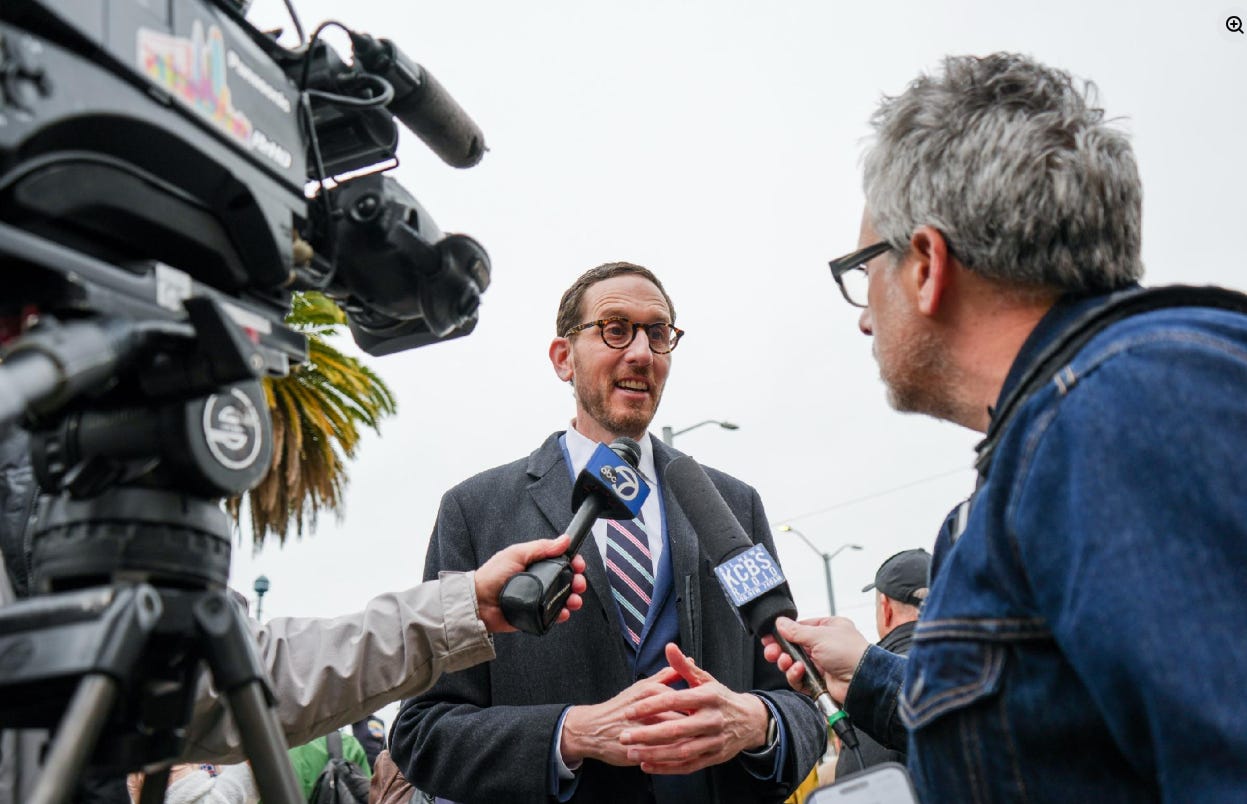
An ambitious, $23 billion plan to bolster scientific research in California, ranging from wildfire and ocean investigations to gene therapy and water supply problems, was shuffled off this week to a land of legislative limbo.
The proposed bond measure was sent to the “suspense” file by the state Senate’s Appropriations Committee where it will languish until the middle of May. The bill, SB895, may or may not emerge from the committee at that point.
What will determine the proposal’s fate are the state budget battles caused by the state’s $35 billion structural deficit. Structural means that the deficit is not a one time matter but is expected to persist for years unless corrective measures are taken.
The situation is not good news for the measure, authored by Sen. Scott Wiener, D-San Francisco. While many, perhaps most suspense file measures clear the Appropriations Committee, many also do not. Most of the deliberations that determine their fate take place behind closed doors.
Even if the plan wins legislative approval, it also must be signed by the governor. Then it will go on the November ballot, which is likely to have other major bond measures on it. They all compete to win over voters, who often feel penurious when spending requests overburden them.
Wiener introduced his bill last year in reaction to Trump’s assaults on federal research programs. Its size may seem large, but it pales against the $48 billion-a-year that the federal government spends on just one research area -- biomedical research.
The legislation also would make life difficult for the state’s stem cell and gene therapy program, which will need refinancing by voters in a few years. If Wiener’s bill is approved by voters, it could make the California Institute for Regenerative Medicine (CIRM) appear to be redundant. However, the legislation provides no funding for the 21-year-old program.
The legislation has been endorsed by the University of California and Stanford University in addition to the auto workers union. Over the weekend, an opinion piece supporting the state measure appeared in the Washington Post. It was written by Shawn Fain, president of the United Auto Workers International Union.
“California’s legislators and governor have a choice,” Fain wrote. “They can stand with science, with the workers and innovations that power California’s economy, and with the millions of people across the country who are hoping for cures, or they can capitulate to the Trump administration and its billionaire backers.
“Signing SB895 would send a clear message: California is still a place where science matters, and California is willing to lead on issues that matter to working people when Washington won’t.”
In California, the $23 billion proposal has received little significant news coverage. And the readership in California of the Washington Post is tiny.